
ArticleWhy Mobile-First Fundraising Matters for Nonprofit Growth
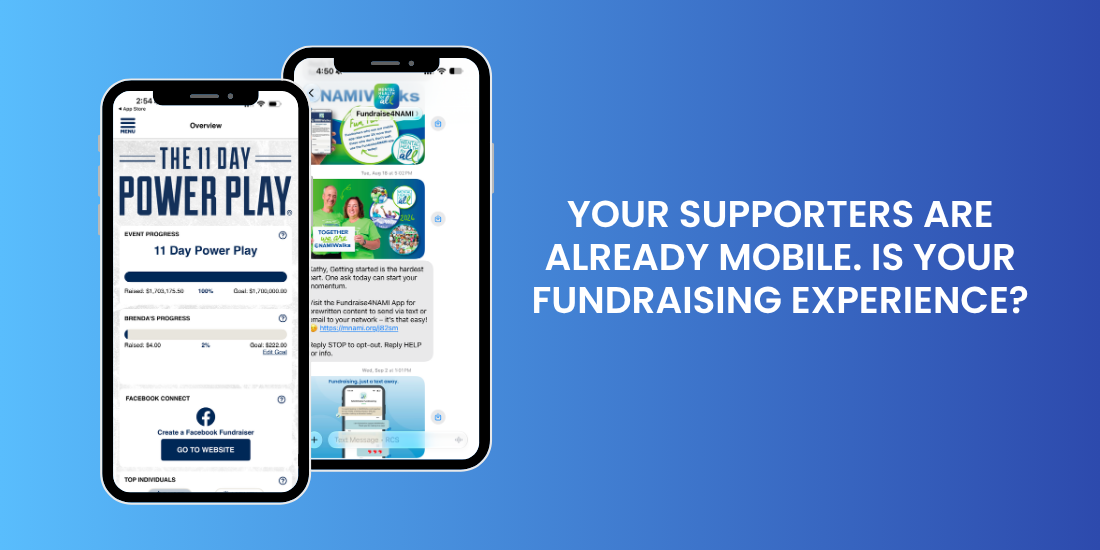
What changing supporter behaviour could mean for the next generation of peer-to-peer fundraising
I’ve worked in fundraising, so I know how much goes into building a successful peer-to-peer campaign.
The platform. The fundraising journey. The participant experience. The emails. The event. The stewardship. The reporting.
When all of those things come together, the results can be incredible.
UK and European fundraising teams are already doing some incredibly sophisticated work. And having studied consumer behaviour as part of my degree, I’m particularly interested in how changes in the way people communicate, interact and make decisions translate into supporter behaviour.
We can sometimes feel pressure in our sector to change what we already know works. That’s not the conversation I want to have.
I think there’s a more interesting question:
Are our fundraising experiences keeping pace with the way our supporters actually behave?
- Because our supporters have changed.
- They live on their phones.
- They message instead of email.
- They share things instantly.
- They expect experiences to be quick, intuitive and personalised.
And perhaps most importantly, they don’t think about “digital fundraising” as a separate activity.
They’re simply using their phone.
So what happens when we start designing the fundraising experience around that reality?
Your supporter is already mobile
One of the things I find particularly interesting about supporter behaviour is the gap between the digital infrastructure charities use and have built and the device sitting in their supporter’s hand.
Most successful charities already have sophisticated fundraising platforms.
Those platforms do a huge amount of heavy lifting – managing participant registrations, donations, fundraising pages, communications and data.
But the experience isn’t always designed around the moments when fundraising actually happens.
Think about a supporter coming home from a run they’re completing for your cause.
- They’ve just finished 10km.
- They’re feeling good, albeit a little tired.
- They’ve taken a photo.
- They’re motivated.
- They want to tell their friends.
That’s a fundraising moment.
But if the next step is opening a browser, finding their fundraising page, logging in, copying a link and then moving into WhatsApp or social media to share it, we’re introducing friction into a moment that should be incredibly easy.
And we all know what happens when something isn’t quite easy enough.
I’ll do it later.
And sometimes, later never comes.
The data suggests mobile can make a difference
This isn’t just a theory about changing behaviour.
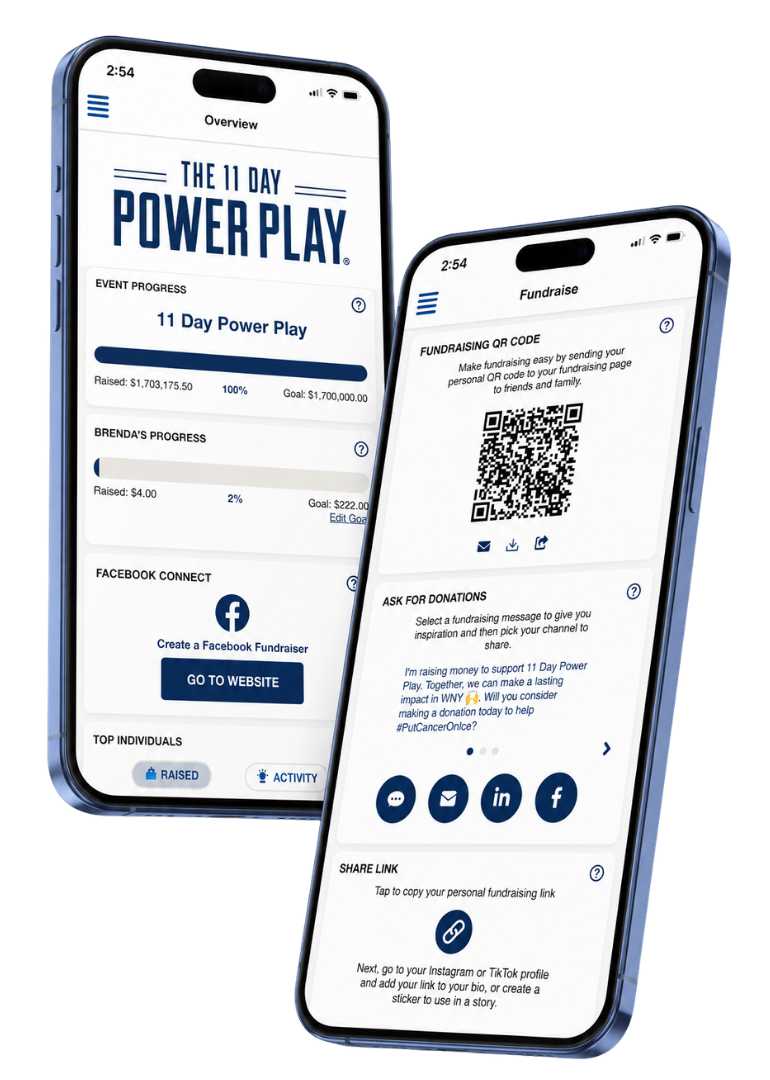 The results from the 2026 campaign for The 11 Day Power Play provide an interesting example.
Participants using a dedicated mobile app raised 62% more on average than participants who didn’t use the app.
The mobile experience also accounted for 11.29% of the campaign’s total online donations.
Of course, campaign performance is influenced by lots of factors.
But I do think the data gives fundraisers something worth exploring:
What happens when we put the fundraising experience into the environment where our supporters are already spending their time?
And importantly, this doesn’t have to mean abandoning the platforms that already work.
It can mean adding a mobile layer around them.
That’s the approach I find particularly interesting with what our team have brilliantly built at Nuclavis.
We’re not asking charities to start again.
We’re looking at how a branded mobile experience can connect with existing fundraising infrastructure and make specific parts of the supporter journey much more native to the supporters phone.
And one of the most interesting examples is sharing.
The most valuable fundraising moment might be the moment itself
Anyone who has worked in peer-to-peer fundraising knows that sharing is important.
But I think we’re starting to understand something slightly different:
When you share can be just as important as what you share.
- A supporter completes a challenge.
- They hit a milestone.
- They’ve had a brilliant training session.
- They’re emotional after finishing an event.
- That is when they want to tell people.
Not tomorrow.
Not after they’ve remembered their password.
Right now.
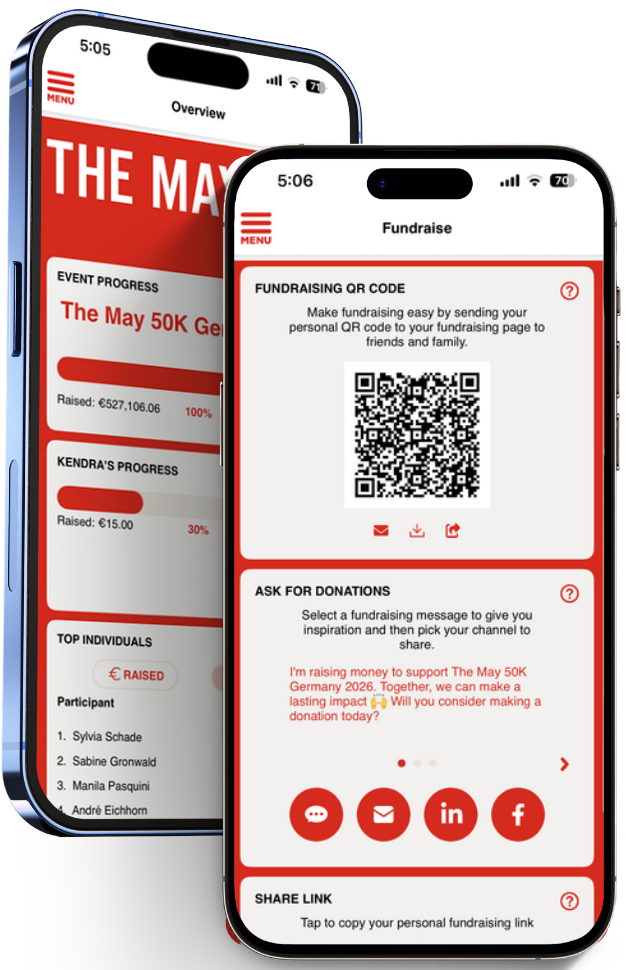 We saw this play out with Deutsche Multiple Sklerose Gesellschaft (DMSG) Germany during The May 50K.
Their mobile experience included a Social Share feature designed to make that process immediate.
The result?
58% of all mobile fundraising came through that single Social Share feature.
That statistic really caught my attention.
Because the underlying idea isn’t complicated.
It’s simply about removing the distance between motivation and action.
As a fundraiser, that’s something I find really compelling.
We’re not trying to teach supporters a new behaviour.
We’re making an existing behaviour easier.
But isn’t mobile a massive IT project?
This is probably the question that comes up next.
And it’s completely understandable.
Anyone working in fundraising or digital knows that the phrase “we’ll just build an app” can quickly turn into a very different conversation.
- Six months.
- Custom development.
- Multiple integrations.
- Testing.
- App store approvals.
- Participant training.
And suddenly your next campaign has come and gone.
But modern approaches to mobile don’t necessarily have to work like that.
A great example is DMSG Germany.
The team discovered the Nuclavis mobile framework just weeks before registration for The May 50K closed.
They launched a fully functional mobile experience in four weeks.
The campaign went on to achieve:
- 2,268 app downloads
- 25% participant adoption
- €49,411 raised through the mobile channel
The 25% adoption rate was also more than three times the first-year benchmark.
For me, that’s the interesting part of the story.
Not simply “we built an app quickly.”
It’s that a charity could introduce a meaningful new layer to its supporter experience without needing to embark on a huge technology transformation.
Agility matters.
Especially in fundraising, where campaign calendars don’t always wait for your IT roadmap.
And then there’s messaging…
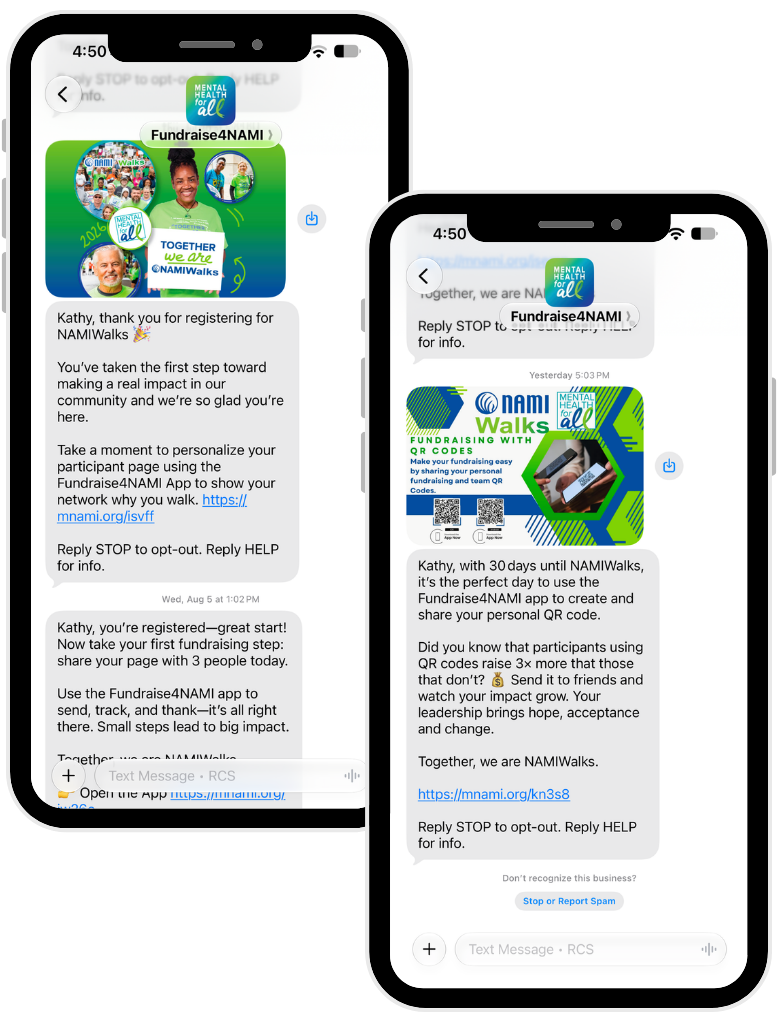 If supporters are already living on their phones, we also need to think about how we’re communicating with them there.
SMS has been a fundraising workhorse for years.
- It’s direct.
- It’s familiar.
- And it gets messages into the hands of supporters quickly.
But messaging is changing too.
One development I’m particularly interested in is RCS, Rich Communication Services.
For anyone who hasn’t come across it yet, think of RCS as a richer evolution of the traditional text message.
Depending on the device, network and market, RCS can bring things like:
- Branded sender information
- Verified sender details
- Images and richer content
- Interactive buttons
- More engaging in-message experiences
Instead of sending:
You’ve reached 20km! Keep going: [link]
Imagine being able to create a more interactive experience directly within the messaging environment.
- Log your kilometres.
- Share your progress.
- View your fundraising page.
- Get your next challenge.
The important thing isn’t the technology itself.
It’s what it allows us to do with the supporter journey.
We’re moving from thinking about messaging as a broadcast channel to thinking about it as part of an ongoing, connected experience.
And that’s where I think things get really interesting.
What could the next generation of fundraising look like?
Are we designing for the way our supporters actually live, or the way we wish they lived?
Because the phone isn’t coming. It’s already here.
- Our supporters are already mobile.
- They’re already sharing.
- They’re already communicating through messaging platforms.
- They’re already expecting more immediate, intuitive digital experiences.
The opportunity for fundraising teams is to take the brilliant peer-to-peer portfolios they’ve already built and make those experiences work harder on the device their supporters already have in their hands.
That’s what I’m excited about.
Not replacing what works.
Not adding technology for technology’s sake.
But making fundraising feel more natural, more immediate and a lot more connected to the way people actually behave.
Your supporters are already mobile.
Is your fundraising experience?
I’d love to hear from fundraisers and digital innovation leads across the UK and Europe: where do you see the biggest opportunity to make the supporter journey more mobile-first?