
ArticleFrom Broadcast to Conversation
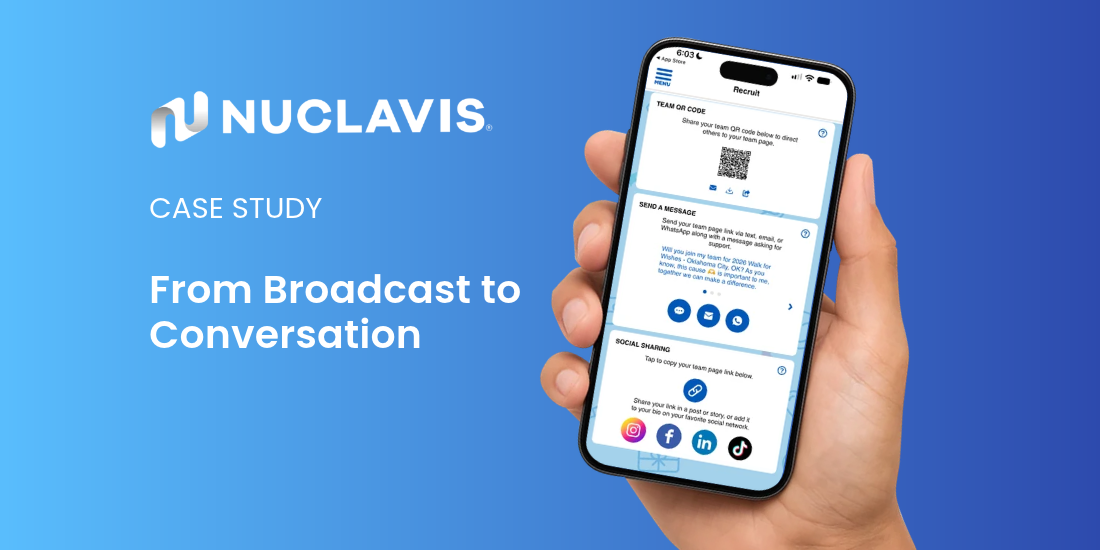
The nonprofits that win the next decade of fundraising won’t necessarily be the loudest. They’ll be the ones that know how to have a conversation.
It’s a shift we see across every part of fundraising, from how nonprofits tell their stories on video, to how they turn interest into sign-ups, to how they stay in touch afterwards.
Supporters are moving away from broadcast channels and towards direct, personal, mobile-first relationships. It’s something we’re building for every day at Nuclavis.
Here’s what that looks like in practice, and how the nonprofits we work with can make the most of it.
-
Stories now live in seconds
Storytelling is as old as humankind, but the window to tell a story has never been shorter. For short-form video, 15 seconds or less works best, and the structure is simple:
- Hook (2–3 seconds): stop the scroll with text on screen, a striking visual and sound.
- Hold (around 8 seconds): keep attention with movement and energy.
- Ask (2–3 seconds): give one call to action.
Think of it as three jobs: earn attention, keep it, and give people a reason to act. Research consistently shows that movement and visual energy, such as animation, make video content more effective.
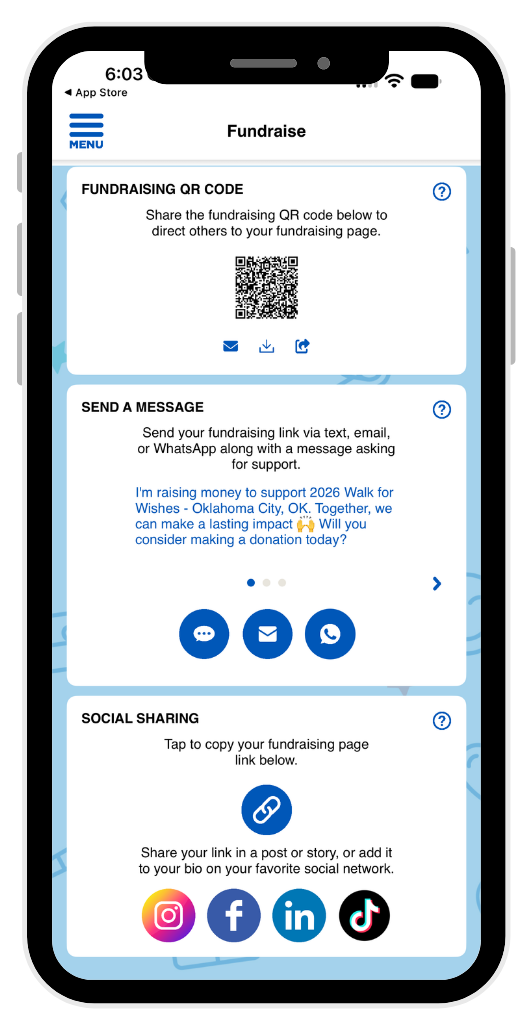 What this means for P2P programmes: your most powerful storytellers aren’t always sitting internally. They’re your participants. A walker sharing why they’re taking part will often outperform a polished brand video, because it comes from someone their friends and network already trust.
The opportunity is to make it easy for participants to tell that story well. Give them short prompts (“Tell people in your network why you’re walking”), ready-made visuals and one-tap sharing to Instagram, TikTok, Facebook and LinkedIn, all from your Nuclavis app in their pocket. Every participant becomes a storyteller, and every story ends with a link to give.
-
The ask deserves as much care as the story
A great story with a vague ending might be leaving money on the table. The best practice here is refreshingly simple: keep calls to action to one or two words, four at most, and make them active. “Donate” becomes “Donate Now”. “Learn More” becomes “Sponsor Me”.
The second rule: send people to one place to convert. Every extra choice is another chance for people to drop off.
What this means for your peer-to-peer programmes: the best moment to ask is when the supporter is already looking at their phone. Personal and team QR codes, a donation page that loads instantly on mobile, and a single clear button do more than any number of links in an email footer.
-
Reach and relationship
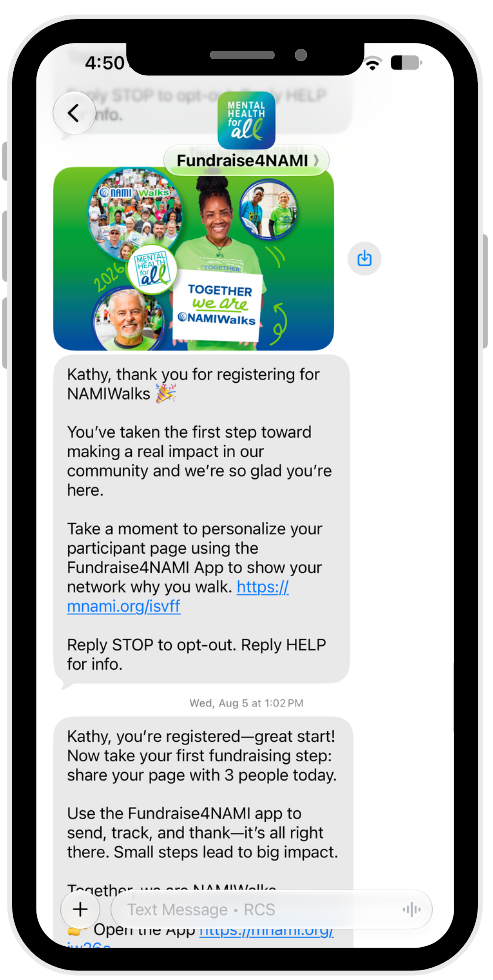 I’ve come to think of every nonprofit’s channels as doing one of two jobs: reach or relationship. Social media is built for reach. It’s public, polished and designed for discovery. Messaging is built for relationship. It’s personal, direct and designed for loyalty. We need both. Reach gets you noticed. Relationship is where trust is built, and where people decide to come back next year.
The case for investing in the relationship side keeps growing. Messaging is now one of the main ways people talk to organisations, yet many nonprofits are still doing very little there.
Supporters increasingly expect direct, mobile-first contact, teams are being asked to do more with less, and expectations around trust and data protection keep rising. All three point in the same direction.
This is exactly where a branded app and integrated messaging earn their place. When a participant downloads your app, they’ve chosen a direct relationship with you. Everything they need sits in one place: their fundraising page, their team, a leaderboard, their QR code, and the tools to ask and to thank. Push notifications and rich messaging via MMS and RCS keep the conversation going between registration and what comes next.
One honest note: messaging should always complement your existing comms strategy, not replace it. Relationship works best when reach is still doing its job.
Five takeaways
- Audit your video hooks: look at your best-performing videos and ask what happens in the first three seconds. Do more of that.
- Tighten every call to action: active verbs, one destination.
- Turn participants into storytellers: give them a one-line prompt, a template and one-tap sharing from their phone.
- Map the journey after sign-up: list the moments a participant needs encouragement, from registration to their first donation, and plan a message for each.
- Give participants a home: put their page, team, QR code and messages in one branded app so the conversation keeps going.
The bottom line
The tools we use will keep changing. New formats, new platforms, new features. What doesn’t change is that people give to causes they feel connected to, and connection comes from conversation.
Reach will always matter. But the nonprofits that thrive will be the ones that turn reach into relationships, and know how to keep the conversation going.
If you’re thinking about how to turn more of your peer-to-peer reach into lasting relationships, we’d love to chat.